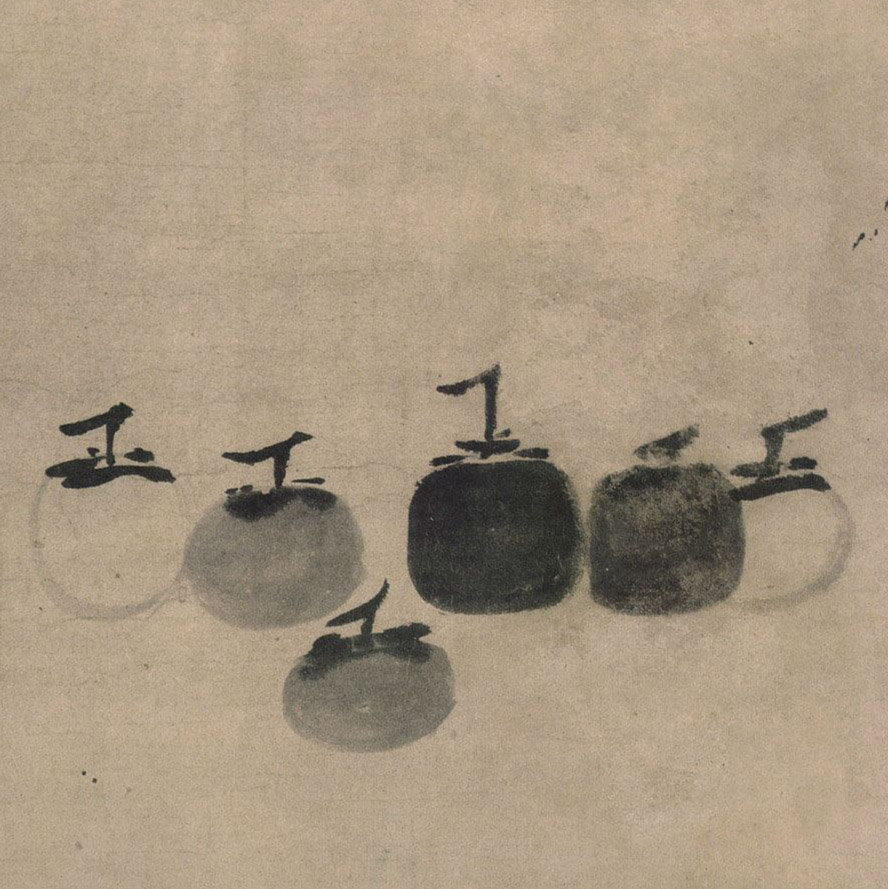
Mu Xi (牧溪 in Chinese), surnamed Li, Buddhist name Fa Chang (法常), and pseudonym Mu Xi, was a native of Sichuan province. He lived approximately during the late Song dynasty and early Yuan dynasty (13th century).
As a key figure in Southern Song Chan painting, he excelled at painting landscapes, vegetables, and fruits, as well as monks and Taoist priests. His strokes were freely and spontaneous, conveying simplicity and directness without excessive embellishment. However, Mu Xi was not well appreciated by his contemporaries of his time; many considered his artworks to be crude and lacking the refinement of traditional methods.
In contrast, Mu Xi, known as ‘Mokkei’ or ‘the Reverend’ in Japan, found a more appreciative audience there. His works were extensively collected and brought back by Japanese monks studying in China. He became the most renowned and celebrated Chinese Chan painter of the Kamakura period (1185–1333) and the Nanbokucho period (1336–1392). With his rough yet simple style imbued with profound Chan insights, his works have exerted a lasting influence on subsequent generations of Japanese painters.