
Sometimes, when viewing Chinese paintings, we see columns of text accompanying the painting, which can go on for several meters, like in the examples below. These are inscriptions - poems, comments, and other writings - that provide context to the painting.
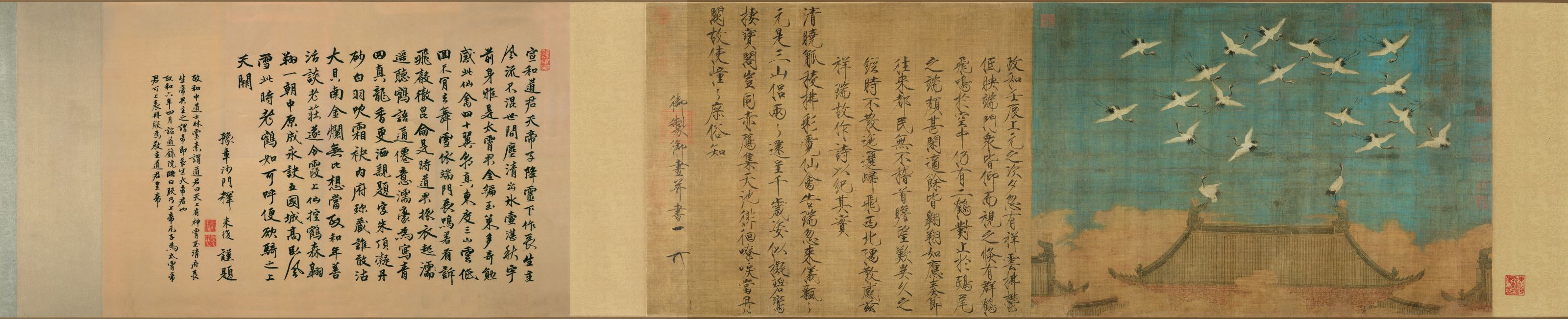
Auspicious Cranes Zhao Ji, Emperor Huizong of Song (51 x 138cm)

Overlapping Riverbanks, Layered Ridges Zhao Mengfu ( 28 x 805cm)
There are different types of inscriptions.
The artist's own inscription, often including the title, his name, the date, and sometimes a short poem explaining the inspiration behind the work, is the first voice on the painting. These artist inscriptions can also reveal their emotional state or personality, strengthening the artistic appeal of the work.
The true magic of inscriptions, however, unfolds after the artist has finished. Paintings were often shared among friends, shown at gatherings, or passed down through generations as treasured possessions. It was customary for viewers - fellow artists, poets, collectors, or even emperors - to add their own inscriptions, or colophons, directly on the painting in the spaces left for them. They would do this to express their admiration for the artist or the artwork itself. These later inscriptions turn the painting into a living record of its own history.